
Finding a good cafe to work from seems easy — until you sit down with a latte, open your laptop, and watch the Wi-Fi wheel spin endlessly. Anyone who’s been there knows better. Not all cafes are created equal.
A decent laptop cafe is more than cups of coffee and a table. It requires quick internet, ample power outlets, comfortable seating, and a place where you can really get to work. Whether you’re a freelancer, a student studying for exams, a remote employee on deadline, or someone who just likes to relax with a cappuccino, the right place is key.
This guide outlines seven of the top fast laptop cafe locations around the world and why each one is worth your time. You’ll also find tips on what to look for, questions to ask before you sit down, and practical advice to help you choose the right spot.
Let’s get into it.
Why the Right Laptop Cafe Really Matters
Before we get to the list, let’s clarify something. Choosing a random cafe to work from can waste hours of frustration. A slow Wi-Fi connection can derail a video call. No outlets means your battery dies halfway through a job. Noisy environments kill focus.
The best fast laptop cafes address all of this. They offer:
- Speed fast enough for video calls and large file uploads
- Power outlets no more than a few seats away
- Comfortable seating for long sessions
- Sound levels low enough to maintain focus
- Food and drinks that help sustain your energy
Find somewhere that ticks all of these boxes, and productivity skyrockets.
The 7 Best Fast Laptop Cafe Locations
1. Chiang Mai, Thailand — The Digital Nomad Capital
Chiang Mai has built up a worldwide reputation as one of the best cities for remote workers. Located in northern Thailand, it offers a low cost of living, a warm climate, and genuinely fast internet.

Cafes here are designed with the laptop crowd in mind. Many provide fiber-optic connections reaching 100 Mbps or more. Popular spots in the Old City area — like Ristr8to and Pun Pun Organic Vegetarian Restaurant — draw a healthy mix of locals and travelers working remotely.
What sets Chiang Mai apart:
- Wi-Fi speeds: 60–100 Mbps
- Cost of living is a fraction of Western cities
- An expansive network of coworking-cafe hybrids
- Consistent electricity with few outages
- Large English-speaking community
Pro tip: Popular spots can get seriously crowded between 10 AM and 2 PM. Arrive earlier or after 3 PM for better seat selection.
2. Lisbon, Portugal — Europe’s Most Welcoming Work-From-Cafe City
Lisbon has exploded in popularity over the last couple of years, thanks to Portugal’s Digital Nomad Visa — and Lisbon emerged as the landing place for most people using it.
The cafes here are mostly spacious, bright, and stocked with power strips. Padaria Portuguesa and independent spots in the Mouraria and Bairro Alto neighborhoods are popular among laptop workers.
What sets Lisbon cafes apart:
- High average Wi-Fi speeds — typically 80 Mbps or higher
- Staff are accustomed to people sticking around, thanks to a strong coffee culture
- Most cafes are open until midnight
- Most central squares have speedy public Wi-Fi
- Excellent food at budget-friendly prices
The LX Factory neighborhood is a must-visit — a cluster of creative cafes that double as co-working spaces, especially on weekends.
3. Melbourne, Australia — Specialty Coffee Meets Serious Speed
Melbourne is internationally known for its coffee scene. What fewer people realize is that the city’s cafe culture strongly serves laptop workers too.
Cafes in the CBD and suburbs like Fitzroy, Collingwood, and Brunswick cater to remote workers as a regular part of their clientele. Speeds are generally strong, thanks to NBN infrastructure covering most of the city’s commercial zones.
Melbourne cafe highlights:
- Wi-Fi ranging from 70–120 Mbps at most venues
- World-class specialty coffee
- Sit-and-work culture is the norm — nobody is rushing you out
- A huge range of spaces: industrial, cozy, minimalist, and vintage
- Great public transport links make it easy to hop between spots
Baristas like Seven Seeds, Patricia, and Brother Baba Budan are favorites with the city’s freelance set. Most have multiple power outlets and long hours.
4. Seoul, South Korea — The World’s Fastest Internet
Seoul is in a league of its own when it comes to raw speed. South Korea consistently ranks among the top countries in internet infrastructure, and that quality flows directly into its cafes.
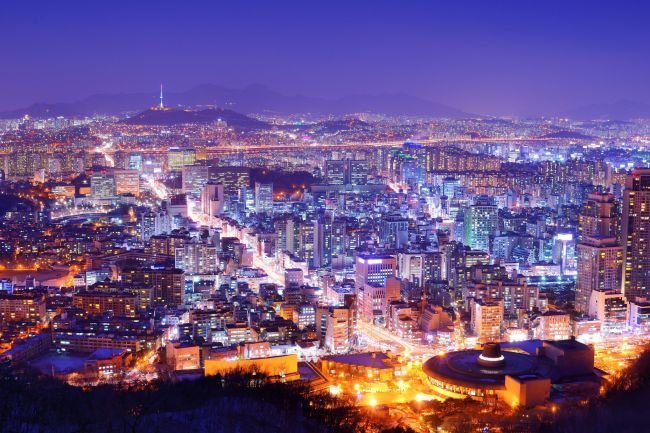
Cafe culture is deeply embedded in daily life in Seoul. The city is known for its themed cafes, multi-floor coffee shops, and study cafes (known locally as 스터디카페). Many are open 24 hours. Some even offer private cubicles with monitors and charging hubs.
Why Seoul tops the speed chart:
- Cafe Wi-Fi consistently reaches 100–200 Mbps
- 5G coverage across most of the city
- Many cafes are open 24/7
- Study cafes provide silent, private booths
- Budget-friendly menus, especially outside tourist zones
Great neighborhoods for laptop work include Hongdae, Gangnam, and Insadong. The Ediya and Hollys Coffee chains are solid everyday options, while independent cafes in Yeonnam-dong lean more creative.
5. Medellín, Colombia — South America’s Tech Hub
Medellín has undergone a remarkable transformation over the past 20 years. Today, the city draws thousands of remote workers annually, thanks to affordable living, a spring-like climate year-round, and a growing tech startup scene.
El Poblado and Laureles are the go-to neighborhoods for remote workers. Venues like Pergamino Café and Velvet have developed loyal followings among the city’s expat and nomad community. If you’re exploring options for your next base, check out Laptop Cafe Guide for more city-by-city breakdowns and reviews.
Medellín’s cafe strengths:
- Wi-Fi averages 50–70 Mbps at the best spots
- Outstanding coffee — Colombia is one of the world’s largest producers
- Very affordable compared to US or European cities
- Warm, unhurried atmosphere
- A growing remote worker community makes networking easy
One caveat: Wi-Fi quality can vary significantly between venues. Always run a speed test before settling in for the day.
6. Amsterdam, Netherlands — Orderly, Spacious, and Swift
Amsterdam has a long tradition of independent cafes and a culture where working in public is widely accepted. The city’s infrastructure is excellent, and fiber internet covers most central cafe areas.
What sets Amsterdam cafes apart is the space. Dutch cafe design tends to be open and generous — long communal tables, large windows, and room to breathe. Noise levels stay moderate, and you rarely feel cramped.
Amsterdam quick facts:
- Wi-Fi speeds frequently hit 80–100 Mbps
- Most cafes open from 8 AM to 10 PM, sometimes later
- Spacious layouts make long screen sessions comfortable
- Easy to bike between spots around the city
- English is spoken almost universally
Top work-friendly cafes include Lot Sixty One, Scandinavian Embassy, and White Label Coffee — all known for reliable connections and a low-key, focused vibe.
7. New York City, USA — Hustle Capital with Hidden Gems
New York has a reputation for being frenetic. And in many ways, it is. But the city also has hundreds of laptop-friendly cafes with solid Wi-Fi, great coffee, and surprisingly calm atmospheres — once you know where to look.
The key is knowing which neighborhoods to target. The Lower East Side, Williamsburg in Brooklyn, and the West Village in Manhattan all have dense clusters of independent cafes built for the laptop crowd.
New York laptop cafe highlights:
- Good Wi-Fi at quality spots — usually 70–100 Mbps
- A wide range of settings: cozy, modern, minimalist, vintage
- Most venues open early and close late
- Great food in every neighborhood
- Avoid uptown and touristy districts for work sessions
Cafes like Think Coffee, Devoción, and Cafe Grumpy have devoted remote worker followings. All three offer reliable speeds, multiple outlets, and staff who understand that some customers stay for four hours.
How to Choose the Right Cafe for You
Not every great cafe is right for every person. Here’s a simple framework:
| Your Priority | Best Pick |
|---|---|
| Lowest cost | Chiang Mai or Medellín |
| Fastest speeds | Seoul |
| Best coffee | Melbourne |
| Late-night hours | Lisbon or Seoul |
| Most spacious | Amsterdam |
| Urban energy | New York City |
| Nomad community | Chiang Mai or Medellín |
How to Get the Most Out of Any Laptop Cafe: Pro Tips
Finding a great location is half the battle. Using it well is the other half.
Always Test Before You Commit
Don’t open your laptop and jump straight into a video call. Connect to Wi-Fi first and run a quick speed test. Apps like Speedtest by Ookla take about 30 seconds and give you a clear picture of what you’re working with.
If the speed is below 10 Mbps, move on. Most video call apps require a minimum of 5–10 Mbps for smooth operation. File uploads and downloads need even more.
Ask About Time Limits and Busy Hours
Some cafes impose time limits, particularly during peak periods. A quick question at the counter before you order prevents an awkward conversation later. In return, buy something every couple of hours. It keeps the relationship with staff positive and helps the business sustain the workspace it provides.
Use Your Own Hotspot as a Fallback
Even the best cafes can have a bad day. A router reboot, a spike in users, or a street-level outage can cut your connection without warning. Having a mobile hotspot as backup means you never miss a deadline.
Sit Close to the Router When You Can
Wi-Fi weakens with distance and interference. Simply asking staff where the router is — five seconds of effort — can effectively double your speed. Walls, pillars, and crowding all degrade signal quality.
How Fast Do You Actually Need?
This is a question many people overlook. The answer depends entirely on what you’re doing.
| Task | Speed Required |
|---|---|
| Basic browsing and email | 5–10 Mbps |
| Video calls (Zoom, Teams, Meet) | 10–25 Mbps |
| Uploading large files / cloud storage | 30–50 Mbps |
| Streaming video | Add 5–25 Mbps depending on quality |
| Running a VPN simultaneously | Add 10–30% overhead to all of the above |
If you’re doing more than basic emails, aim for cafes offering 50 Mbps and above. All seven locations in this guide have cafes that clear that bar — when you know where to look.
The Real Cost of a Bad Laptop Cafe
It’s tempting to assume that any cafe with Wi-Fi will do. But the hidden cost of a poor location adds up quickly.
- Lost time from slow speeds. Uploading one gigabyte of data might take 30 minutes instead of 5. That’s 25 minutes lost — every single time. Multiply that across a full week of work.
- Missed calls and broken meetings. A dropped video call during a client meeting is cringeworthy and unprofessional. One bad connection can damage a working relationship.
- Physical discomfort. Bad chairs and low tables cause back and neck pain during long sessions — which leads to shorter, less productive days.
- Noise fatigue. Constant background noise forces your brain to work harder just to think. It’s exhausting in ways that aren’t obvious until the end of the day.
Spending 10 minutes finding the right location from the start pays back many times over.
Common Questions About Fast Laptop Cafes
Q: What are the minimum Wi-Fi speeds I should look for? A: Most remote work — including video calls and file sharing — runs comfortably at 25–50 Mbps. Every location in this guide offers at least that, and often much more.
Q: Is it rude to stay in a cafe for hours over just one coffee? A: It depends on the cafe and how busy it is. During peak hours, ordering something every 60–90 minutes is good etiquette. Most cafes that cater to laptop workers thrive on exactly this dynamic.
Q: Should I use a VPN on cafe Wi-Fi? A: Yes — a VPN is a good idea on any public network. It encrypts your connection and prevents others on the same network from seeing your data. Just factor in the speed overhead when choosing your cafe.
Q: Which of these seven cities is cheapest for long-term remote workers? A: Chiang Mai and Medellín are the most affordable by a wide margin. You can live and work comfortably in either city for a fraction of what you’d spend in Melbourne, Amsterdam, or New York.
Q: How do study cafes in Seoul differ from regular cafes? A: Study cafes (스터디카페) in Seoul are dedicated quiet-work facilities. They typically charge by the hour and offer private booths, monitors, and high-speed connections. They’re excellent for deep work sessions.
Q: When should I arrive to get a good seat at a popular cafe? A: Aim for opening time or late afternoon (2–4 PM) — after the morning rush and before the dinner crowd. Weekday mornings are almost always better than weekends.
Q: Are there great fast laptop cafes in cities not on this list? A: Absolutely. Tokyo, Berlin, Toronto, and Bali all offer excellent options. The same principles apply everywhere: test speed, check outlets, consider noise levels.
Wrapping It All Up
Finding a great workspace doesn’t have to mean expensive office rentals or stuffy conference rooms. The right cafe can give you everything you need: a fast connection, a great drink, a seat that won’t destroy your back, and an atmosphere that helps you get things done.
From the fiber-speed cafes of Seoul to the specialty coffee shops of Melbourne, from the budget-friendly nomad havens of Chiang Mai to the late-night workspaces of Lisbon — there’s a fast laptop cafe location out there that suits your style and your schedule.
Use this guide as your starting point. Test the speed before you settle in. Order a drink now and then. And remember: the best workspace isn’t necessarily the fanciest — it’s the one where you can show up, connect, and do your best work.