
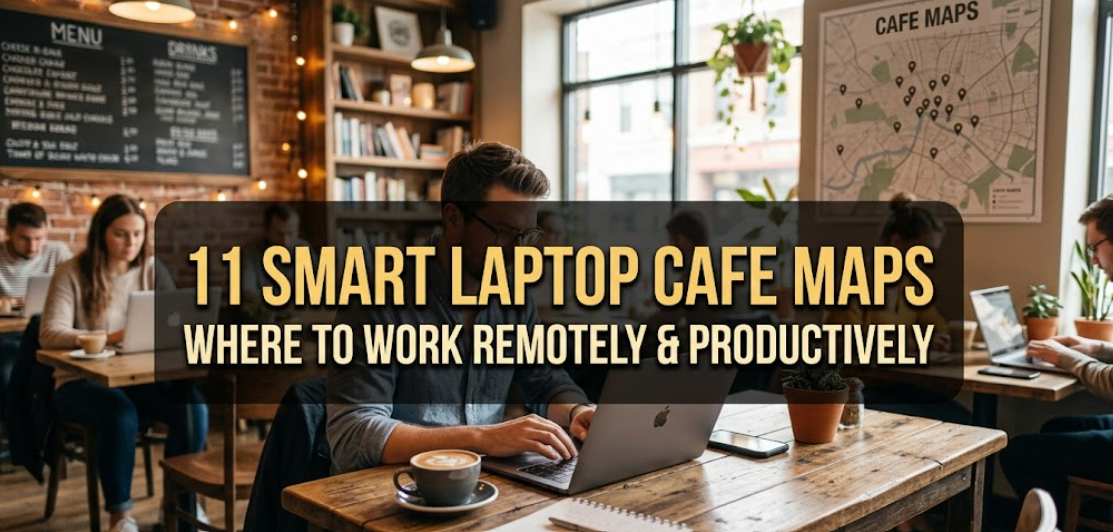
Remote work is booming. Stores that sell coffee can be crowded with people typing away on keyboards, coming in and out of video calls and nursing cups of coffee for hours. If you own or manage a cafe, this is a huge opportunity — but only if your space is set up correctly.
An ill-conceived laptop cafe will chase people away quickly. Poor lighting, no outlets, slow Wi-Fi or uncomfortable seating converts potential regulars into one-time visitors.
This is a lesson in 11 café layouts to help you figure out the appropriate smart laptop cafe design, from seating areas to lighting hacks. Whether you’re beginning from scratch or rethinking an existing space, these ideas are pragmatic, tested and easily implemented.
Why Cafe Layout Matters More Than the Menu
Cafe owners tend to be menu-focused. Layout tends to be second — or not planned at all.
But here’s the reality: your physical environment dictates how long customers stay, how much they spend and whether they return.
A layout built around laptops signals to remote workers that they play a preferred role. It says: “We designed this space with you in mind.” And that trust translates to revenue.
Research on workspace design indicates that people work better and feel more comfortable and productive when their environment is frictionless. That means easy access to power, low noise, decent light and logical flow.
Let’s review the layouts that make it all happen.
Layout 1: The Zonal Productivity Floor Plan
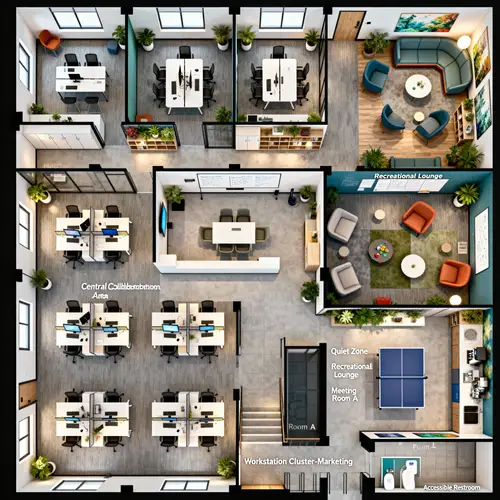
This zoned layout breaks your cafe down into specific zones for different customer types.
Here’s how it typically works:
- Quiet Zone — solo laptop users, no phone calls allowed
- Social Zone — for groups, louder conversations, meetings
- Flex Zone — multi-use, adaptable seating that can be adjusted based on demand
This setup prevents friction. The remote worker who requires silence need not sit beside a group interview. Everyone finds their spot quickly.
How to Mark Your Zones
You don’t need walls. Use simple cues like:
- Color-coded floor mats or rugs
- A zone map printed on a sign near the entrance
- Varying styles of furniture by zone (benches for social, individual desks for quiet)
This is one of the best laptop cafe guide layouts because it caters to different work patterns without alienating anyone.
Layout 2: The Window-First Seating Layout
Natural light is a very underrated component of cafe design. People gravitate toward windows instinctively.
Put your longest counters or bar-style seats along window walls. It provides solo laptop workers with a view, natural light and an impression of wide open space — all without sacrificing any square footage.
Why Window Seating Works
- Minimizes eye strain during long working hours
- Makes the space feel larger and more welcoming
- Naturally divides solo workers from group tables in the middle
If you have limited window walls, supplement with warm LED lighting that resembles daylight (bulbs rated 4000–5000 Kelvin).
Layout 3: The Power-First Design
Nothing frustrates a laptop worker more than searching for an outlet.
This layout is organized around electrical access first. Every seat — or at least 80% of them — is near a power outlet or charging station.
Here’s a quick overview of the most popular power setup approaches:
| Setup Type | Cost Level | Best For |
|---|---|---|
| Wall outlets only | Low | Small cafes, older buildings |
| Under-table power strips | Medium | Long counters and booths |
| Tabletop USB hubs | Medium | Individual desks and islands |
| Floor-embedded outlets | High | Open floor plans, new builds |
| Wireless Qi charging pads | Medium-High | Premium positioning, phone users |
Most cafes can address the bulk of customer demand with a mix of under-table strips and tabletop USB hubs — without the demolition required to install outlets in every booth.
Layout 4: Library-Style Row Layout
Consider the arrangement of a library reading room. Long tables, individual chairs, quiet space, clear sightlines.
This layout works exceptionally well for cafes that serve students and deep-focus workers. Tables are arranged in parallel, each with built-in power access and decent overhead lighting.
Pros of Row Layout
- Increased seating capacity per square foot
- Easy to clean and maintain
- Feels organized and professional
Cons to Watch
- Can feel cold or institutional without the right decor
- Not great for group collaboration
- Limited privacy for phone calls
To soften the look, add plants, warm wood finishes and indirect lighting. This transforms rows from austere to elegant.
Layout 5: The Booth-and-Bar Combo
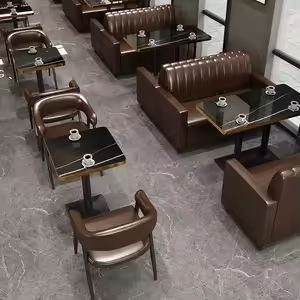
Booths along one wall. Bar seating along another. Open tables in the middle.
This is one of the most versatile layouts because it naturally sorts itself. Booths tend to attract small groups or those seeking a semi-private feel. Bar seating draws solo workers. Open tables serve everyone else.
What Makes This Work
Booths provide physical separation without complete enclosure. A remote worker on a video call in a booth is considerably less disruptive than one sitting at an open table.
Bar seating encourages a head-down, work-focused posture — which is exactly what most laptop workers seek.
The combo provides three micro-environments within a single floor plan.
Layout 6: The Phone Booth Nook
A growing trend in cafes built for remote workers: the private nook.
These are small, semi-enclosed spaces — sometimes just two walls and a curtain — where someone can take a call, join a video meeting or have a confidential conversation without disturbing others.
You don’t need to construct a fully soundproofed room. A recessed nook with an acoustic panel backdrop and a sliding curtain works well.
Design Tips for Nooks
- Minimum size: 3 feet wide × 4 feet deep (enough for one person and a laptop)
- Install a mini counter-height shelf
- Add one good LED light overhead
- If possible, place an “In Use” indicator outside
Two or three of these nooks will become your most requested spots. Workers will plan their visits around them.
Layout 7: The Standing Desk Station
Sitting all day isn’t ideal. Many remote workers actively seek out standing desk alternatives when choosing where to work.
A standing desk station in your cafe doesn’t need to be complicated. A raised counter at 42–44 inches (the standard ergonomic standing height) paired with bar stools gives people the option to sit or stand as they please.
This is an easy touch that costs very little, but communicates a lot: this cafe understands how modern workers work.
Layout 8: The Nature-Integrated Green Wall Layout
Research consistently shows that greenery in the workplace increases concentration, lowers stress and improves wellbeing. According to a study published in the Journal of Environmental Psychology, even brief exposure to plants can improve focus and mood in work environments.
The green wall design uses plants as structural design elements, rather than mere decoration. A living wall of plants on one side of the cafe absorbs sound, improves air quality and provides a visual anchor that draws customers in.
For more modest cafes, potted plants on shelves and hanging planters can deliver a similar effect at a fraction of the cost.
Quick Plant Guide for Cafes
| Plant | Light Needed | Maintenance | Benefit |
|---|---|---|---|
| Pothos | Low to medium | Very easy | Air purifier |
| Snake plant | Low | Very easy | Works in dark corners |
| Peace lily | Low | Easy | Humidity balancer |
| Fiddle leaf fig | Bright indirect | Moderate | Visual statement |
| Moss wall panel | None (artificial) | None | Acoustic absorption |
All of these plants are non-toxic, low-maintenance and do well in cafe conditions.
Layout 9: The Collaborative Corner Layout
Not every remote worker is working alone. Freelancers collaborate. Teams hold standups. Creatives brainstorm together.
The collaborative corner is a dedicated area featuring large tables, whiteboard walls, movable seating and relaxed noise policies. It is the opposite of the quiet zone — it’s designed for energy and interaction.
What to Include
- 4–6 person tables that can be combined
- A writable surface (whiteboard wall, large chalkboard or glass panels)
- Additional power access for multiple devices
- Good overhead lighting for video calls
Cafes that offer a collaborative corner often attract small businesses, startup teams and study groups — all high-value, repeat customers.
Layout 10: The Time-Zoned Seating Strategy
This is not a physical layout — it’s a time-based management system that works alongside any of the layouts above.
The concept: certain seats are designated laptop-friendly territory during peak focus hours (typically 9 AM–12 PM and 1 PM–4 PM), then those same seats transition to casual use during breakfast rush and evening hours.
You can implement this with:
- Simple table signage (“Laptop-Friendly 9 AM – 4 PM”)
- Staff communication protocols
- A schedule posted near the entrance
This allows your cafe to serve both the morning coffee crowd and the midday work crowd, without either group feeling displaced.
Layout 11: The Acoustic-First Layout
Cafe workers around the world cite noise as their top complaint.
An acoustic-first floor plan treats sound management as a core design element, not an afterthought. That means selecting materials, arranging furniture and designing ceiling treatments specifically to minimize noise reflection and echo.
What Matters Acoustically
- Hard chairs reflect sound; upholstered seating absorbs it better
- Carpet rugs and runners minimize footfall noise and echo
- Acoustic ceiling tiles or panels prevent sound from bouncing
- Bookshelves serve as natural sound barriers between sections
- Fabric wall art (cotton, canvas, fabric panels) absorbs ambient noise
The goal isn’t silence. It’s a comfortable level of noise — what designers call a “productive hum.” Studies show that background noise at around 65–70 decibels is actually optimal for creative work.
How These 11 Layouts Compare
Here’s a snapshot of how each layout performs across key factors:
| Layout | Solo Worker Friendly | Group Friendly | Noise Control | Power Access | Cost to Implement |
|---|---|---|---|---|---|
| Zonal Productivity | ✅ | ✅ | ✅ | Medium | Low–Medium |
| Window-First | ✅ | ⚠️ | ⚠️ | Medium | Low |
| Power-First | ✅ | ✅ | ⚠️ | ✅ | Medium |
| Library Row | ✅ | ❌ | ✅ | ✅ | Low |
| Booth-and-Bar Combo | ✅ | ✅ | ✅ | Medium | Medium |
| Phone Booth Nook | ✅ | ❌ | ✅ | Low | Medium |
| Standing Desk Station | ✅ | ⚠️ | ⚠️ | Medium | Low |
| Green Wall | ✅ | ✅ | ✅ | Low | Medium–High |
| Collaborative Corner | ⚠️ | ✅ | ❌ | ✅ | Medium |
| Time-Zoned Seating | ✅ | ✅ | ⚠️ | Medium | Low |
| Acoustic-First | ✅ | ✅ | ✅ | Medium | Medium–High |
Mixing and Matching These Layouts
You don’t need to choose just one. The best laptop cafes combine three or more concepts.
A common winning combination:
- A zoned floor plan as the base structure
- Window-first seating for the solo worker section
- Acoustic-first materials throughout
- Power-first design embedded into every seating area
- One or two phone booth nooks toward the back
These layouts are like tools in a toolbox. Some you’ll use together every time. Some you’ll bring out only when the situation calls for it.
3 Must-Have Laptop Cafe Design Principles
Regardless of which layout you select, three fundamentals must always be in place:
1. Reliable, Fast Wi-Fi Post the password prominently. Use a guest network. Ensure minimum download speeds of 50 Mbps. If your budget allows, consider separate networks for each zone.
2. Power Within Reach A minimum of 70% of seats should have power accessible. No one should be crawling under tables or stretching cords across aisles.
3. Clear Communication Let customers know what’s available. A simple card at each table indicating Wi-Fi speed, quiet zone policies and time limits does wonders. Transparency builds trust.
Common Layout Mistakes to Avoid
Even well-meaning cafes make these mistakes:
- Cafeteria-style arrangements — expose people and create distraction
- Hard surfaces with no acoustic treatment — create echo chambers
- Irregular outlet placement — some tables with three outlets, others with none
- Uniform ceiling lighting throughout — bright overhead lights destroy intimacy
- No private space at all — alienates anyone who needs to take calls
Addressing even one or two of these can make a noticeable difference in how remote workers perceive your cafe.
FAQs: Laptop Cafe Layouts
Q: How much space do you need to open a laptop-friendly cafe? There’s no set minimum, but 1,000–1,500 square feet gives you enough room to incorporate at least two or three separate seating areas without feeling cramped. More compact spaces (under 800 sq ft) can still work with smart single-zone designs like the library row or window-first layout.
Q: Should I charge a premium for laptop seating? The most successful laptop cafes don’t charge for the seat — they make their money through a minimum spend policy (e.g., one drink purchase every 2 hours) or dedicated membership passes. Flat “table fee” charges tend to frustrate customers and result in fewer return visits.
Q: How do I deal with customers who linger without making a purchase? A courteous, time-based policy works best. Post a clear sign: “We LOVE remote workers! We ask for one purchase per 2 hours of seating.” Be warm rather than restrictive. Most customers will honor the boundary when it’s communicated kindly.
Q: How much internet speed do I really need? For a cafe with 20–30 concurrent laptop users, aim for at least 200 Mbps of total bandwidth — roughly 7–10 Mbps per person, which is plenty for video calls, streaming and uploading files. Anything under 100 Mbps will cause frustrating slowdowns during peak hours.
Q: Should I invest in acoustic panels? Yes — especially if your space has hard floors, high ceilings or a lot of glass. Acoustic panels offer some of the best ROI of any improvement a laptop cafe can make. They address the top complaint head-on and visibly increase the time customers spend in your space.
Q: How can a small cafe compete with coworking spaces? Easily. Coworking spaces tend to be formal and sometimes expensive. A purpose-built laptop cafe delivers equal productivity with better atmosphere, caffeine included, and social energy that coworking spaces simply can’t replicate. Your advantage is vibe — lean into it.
Q: What furniture works best for laptop users? Look for chairs with proper lumbar support, tables at standard desk height (28–30 inches) and enough table depth (at least 18–20 inches) for a laptop to sit comfortably without hunching. Avoid bistro-style furniture — it looks nice but is miserable for long work sessions.
Putting It All Together
The remote work era has transformed what people expect from a cafe. A great menu is no longer enough.
The best cafe owners are treating their space like a product. They’re designing intentionally — thinking about power, light, sound, flow and privacy as a connected system, not isolated afterthoughts.
The 11 layouts in this guide give you the complete toolkit. Start with the ones that fit your current space and budget. Add more over time as you grow and learn what your regulars actually want.
You don’t have to get it all right on day one. You just have to start — and keep paying attention.
Remote workers are loyal. Once they find a cafe that suits them, they return daily. They bring their colleagues. They tell strangers on the internet about you.
Build the right layout. Earn that loyalty.