

9 kinds of powerful work spots, what to know about each, and how to get the most out of every session — for freelancers, students, and full-time remote workers.
The right café is a game-changer
Most people choose a café because it’s nearby. But that’s a mistake.
The best work spots are carefully chosen. You want that ideal combination of noise level, Wi-Fi speed, seat comfort, power outlets, and coffee quality. Miss one of these and your entire session can go awry.
Consider Laptop Café Guide your cheat sheet for places that are actually effective — not just those with good Instagram capabilities.
What to consider before taking a seat
Before settling in at any café, run through this quick checklist. It costs 60 seconds and saves you hours of pain.
- Is the Wi-Fi speed adequate for your work?
- Are there enough power outlets near available seats?
- Is the noise level suitable for the work you need to do?
- Are the seats comfortable for a long session?
- Is the café too busy right now?
- Is ordering something expected, and do you know the policy?
9 types of power work spots
1. The classic independent coffee shop
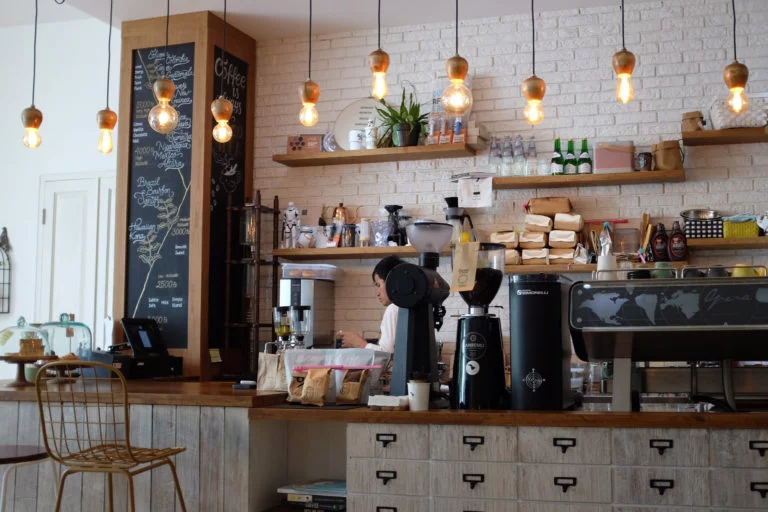
Moderate noiseIdeal: Writers, designers, solo freelancers
Independent cafés have personality. They’re quiet enough that you can think, but lively enough that you don’t feel the loneliness of working from home. The staff tend to know the regulars, and the coffee is generally better than at chain stores.
What makes it work
- Moderate noise level — background chatter, light music
- Generally comfortable working time of 3–5 hours
- Variety of seating — tables, bar seating, couches
Watch out for
- Few power outlets (older buildings sometimes have just 2–3)
- Peak hours (8–10am, 12–1pm) can get loud quickly
Best tip: Go on a weekday morning. That’s when the space is least occupied and staff are most lenient about long stays.
2. Specialty coffee roasters
Low–moderate noiseIdeal: Deep work — coding, writing, research
Specialty roasters are a notch above your average café. They’re about the craft of coffee — and that ethos usually follows through into the space itself. These places tend to be calm, well-lit, and designed with intention.
What makes it a power spot
- High ceilings and natural light — fantastic for concentration
- Less busy, focused clientele
- Quiet, typically instrumental music
3. Café-library hybrids
Ideal: Research, focused reading, deep work
Certain cities have the café-meets-library option. These are gold. You get coffee on demand without noise as a trade-off. Many of these spots include designated silent zones alongside more casual seating areas, so you can choose your environment in accordance with the work at hand.
Why this type stands out
- Structured quiet zones
- More outlets per seat than most cafés
- Often open for longer hours
What to search for: Library cafés, reading cafés, bookshop cafés.
4. Co-working café spaces
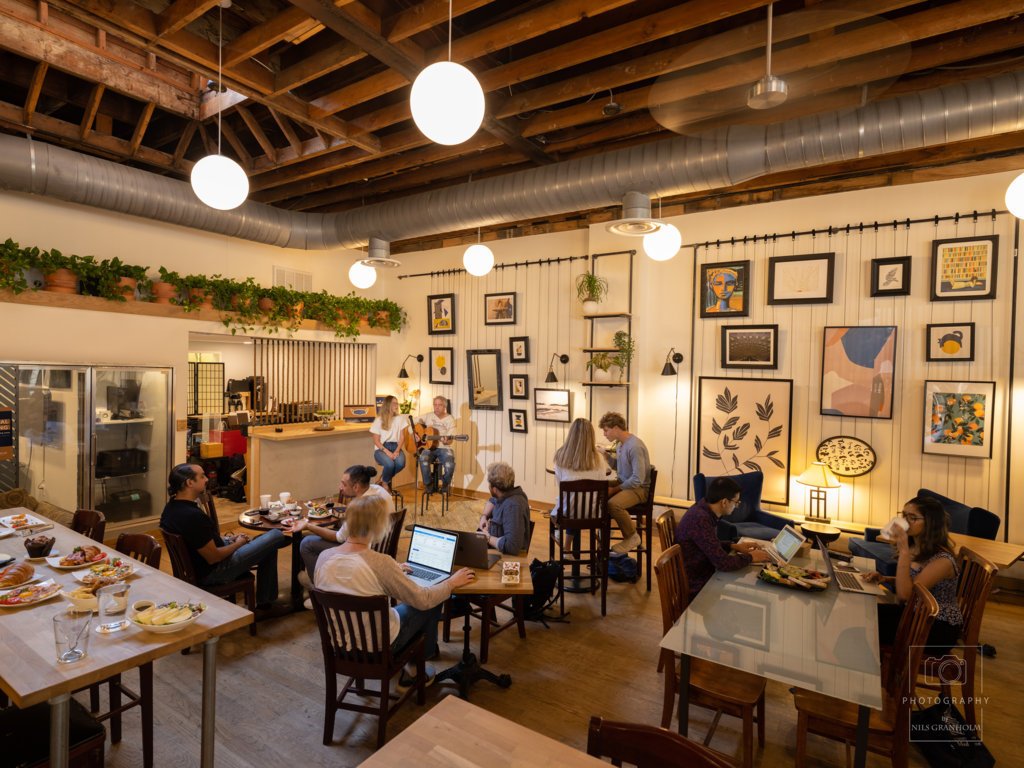
Ideal: All-day work, video calls, team meetings
Co-working cafés sit somewhere between a traditional café and a fully-fledged co-working space. You pay a daily or monthly fee to gain access to dedicated desk space, high-speed Wi-Fi (often gigabit), meeting rooms, and reliable power strips at every seat.
These places cater to remote workers. No awkward looks if you’ve been sitting for four hours. No disruption from a birthday party in the corner.
Cost range
- $10–$30 per day
- $80–$200 per month
5. Hotel lobby cafés
Low noiseIdeal: Business calls, client-facing presentations, high-focus afternoons
Hotel lobbies are designed to keep guests comfortable for long periods of time — and the same logic applies to visitors. The seats tend to be excellent, the Wi-Fi fast and reliable, and the noise level manageable.
Why it works
- Professional, quiet atmosphere
- Power outlets built into seating areas or tables
- Often open 24/7
- No one asks how long you’ll stay
Downside
- Coffee and food can be pricier
Hack: Many hotel lobby spots are completely free. Simply order a coffee and settle in.
6. Bookshop cafés
Very low noiseIdeal: Long writing sessions, reading-heavy research, focused solo work
Having books all around you is a way to sharpen the mind. Bookshop cafés bring you the atmosphere of a library with café amenities. They’re often quieter than regular coffee shops, and the clientele tends to be composed of people who read and think — not noisy group hangouts.
Standout features
- Very low sound — books muffle noise
- Intellectual, calm environment
- Leisurely pace — no rush to depart
Caution: Seating can be limited. Get there early on weekends.
7. Rooftop or outdoor café spaces
Ideal: Creative work, brainstorming, lighter tasks
On the right day, there may be few better places to work than an outdoor café terrace. Natural sunlight, fresh air, and a view go a long way toward boosting your mood and productivity.
When it works
- Mild weather — not too hot, not too cold
- A slight, pleasant breeze
- Wi-Fi reaches the outdoor area
When it doesn’t
- Direct sunlight on your screen
- Strong winds
- Poor outdoor connectivity
Pro tip: If you regularly work outdoors, bring a laptop hood or screen protector to reduce glare.
8. Campus or university cafés
Ideal: Students, researchers, and anyone who thrives in an academic setting
You don’t have to be a student to take advantage of these. University cafés are generally open to the public, especially in big cities. They tend to have extended hours during term time, affordable food and coffee, a focused study-oriented crowd, and solid Wi-Fi throughout.
The ambient noise in a campus café is just right — the productive hum of something going on around you without too much to get in your way.
Note: Some campus cafés require a student ID. Call ahead or check the website before visiting.
9. Open-air market or food hall cafés
High noiseIdeal: Creative speed runs (1–2 hours), ideation, inspiration-driven work
The wild card in the guide — and it has earned its place. Food halls and covered market cafés are growing in popularity in cities across the world, serving coffee and food in a colourful, energetic space.
Why it can work
- Great for short, high-energy sessions
- Boosts creative work
- Relaxed vibe — no pressure whatsoever
Why it sometimes doesn’t
- High noise levels
- Unreliable Wi-Fi
- No dedicated seating — shared and sometimes competitive
How to find a place for your type of work
Not all work is equal — and not all cafés serve the same function. Here’s a framework to help you choose the right one, every time.
| Task type | Ideal spot | Key need |
|---|---|---|
| Deep writing or coding | Bookshop café / specialty roaster | Low noise, no interruptions |
| Video calls | Co-working café / hotel lobby | Fast Wi-Fi, quiet background |
| Creative brainstorming | Rooftop café / outdoor space | Fresh air, visual stimulation |
| Research or reading | Café-library hybrid | Quiet + coffee access |
| Quick 2-hour sprint | Independent coffee shop | Easy access, good coffee |
| Full work day | Co-working café | Reliable outlets, dedicated desk |
| Client meetings | Hotel lobby café | Professional setting |
| Budget-friendly session | Campus café | Affordable, focused crowd |
| Inspired short session | Food hall café | Energy + variety |
Preparing for a productive session
Finding the right café is only half the job. Here’s how to make your sessions worthwhile.
Gear to always bring
- 1Laptop charger — don’t assume the café will have outlets near a good seat.
- 2Noise-cancelling headphones — your single most crucial weapon.
- 3Portable Wi-Fi hotspot — a backup when café Wi-Fi is unreliable.
- 4Laptop stand or lap desk — protect your neck during long sessions.
- 5Reusable water bottle — stay hydrated. Your brain will thank you.
The “order to stay” rule
If you sit down, most cafés expect you to order. A general rule: order once every 90 minutes. It’s good for the business, and it keeps the relationship healthy. Some places mention this directly — take it seriously.
Timing your sessions
Most cafés are best between 7am and 10am. Fewer people, more room, and fresher coffee. For any work that requires sustained focus, steer clear of the lunch rush (12pm–2pm) — it will be the noisiest time of day at nearly every café.
How to create your own laptop café rotation
The top remote workers don’t pin themselves to one place. They build a 3–5 café rotation to fulfil their needs and keep the work environment fresh.
Monday & Wednesday
Co-working café
Deep work days
Tuesday
Specialty roaster
Creative writing or strategy
Thursday
Hotel lobby
Client calls + polished environment
Friday
Coffee shop
Casual wrap up, light work
Laptop café etiquette: the unwritten laws
- 1Order something. Always. Even just a black coffee. It’s the price of admission.
- 2Avoid occupying a table for four by yourself during peak times. Sit at a table for two or at the bar.
- 3Be mindful of your headphone volume. Sound leaks more than you think.
- 4In silent zones, avoid video calls. It makes the environment worse for everyone.
- 5Clean up before you leave. Clear your table, stack your cups, push in your chair.
- 6Be friendly to the staff. They decide if you’re welcome back.
Free vs paid work spaces
For infrequent remote days, a free café is perfect. For full-time remote workers, co-working café memberships typically pay for themselves in productivity within the first week. Co-working spaces charge $10–$30 per day (or $80–$200/month) but offer guaranteed high-speed Wi-Fi, dedicated desks, and reliable power — things that free cafés can’t always promise.
FAQs about working from cafés
Are there any cafés I can work in for free?
Yes, but you have to order something. Most cafés don’t mind laptop workers during non-peak hours. Some have time limits (typically 2–3 hours) — look up their policy before you sit down.
What is the minimum Wi-Fi speed I should accept for remote work?
For basic tasks (email, documents), 10 Mbps is sufficient. Use 25 Mbps or higher for video calls. 50 Mbps+ is best for large file uploads or heavy development work.
How do I find the best laptop cafés in a new city?
Search Google Maps for “laptop-friendly café,” or use apps like Workfrom, Nomad List, or Remote Work Hub. Recent reviews on Google and Yelp typically reveal whether outlets are available and how the Wi-Fi performs.
How important are noise-cancelling headphones?
They aren’t required — but they’re transformative. A decent pair (such as Sony WH-1000XM5 or Bose QC45) can turn a noisy café into a focused bubble. Many remote workers say they’re the most worthwhile investment they’ve made.
Is sitting at a café for 3–4 hours rude?
Not if you’re ordering regularly and the café isn’t crowded. The golden rule: don’t occupy more space than you need, and keep buying something every 90 minutes or so. If the café gets busy, consider moving on to open up seats.
What if my Wi-Fi keeps dropping?
Always have a backup with a mobile hotspot. Most modern phones can double as a hotspot — just check your data plan first to avoid overage fees.
Are hotel lobbies actually free to use as work spots?
In most cases, yes. Hotel lobbies are public spaces. You may need to order from their café or bar, but it’s rarely a formal paid arrangement. Some hotels are now actively promoting their lobbies as day-pass workspaces.
When’s the best time to visit a café for focused work?
Weekday mornings, 7am to 10am. This is usually when seats are most available and staff are least harried. If you need to focus, steer clear of lunch hours and Friday evenings.
Wrap-up: your ideal workspace exists
Finding excellent spots as a remote worker doesn’t have to be guesswork. This guide has covered 9 different types of work spots — from the basic indie café, to the stylish hotel lobby, to the lively food hall. Each one has a purpose. Each one has a sweet spot.
The key is to be intentional. Match your task to your environment. Build a rotation. Respect the space. And always, always bring your charger.
The right café isn’t just going to provide Wi-Fi — it’s going to give you energy, focus, and reason to enjoy your workday. That’s worth finding.